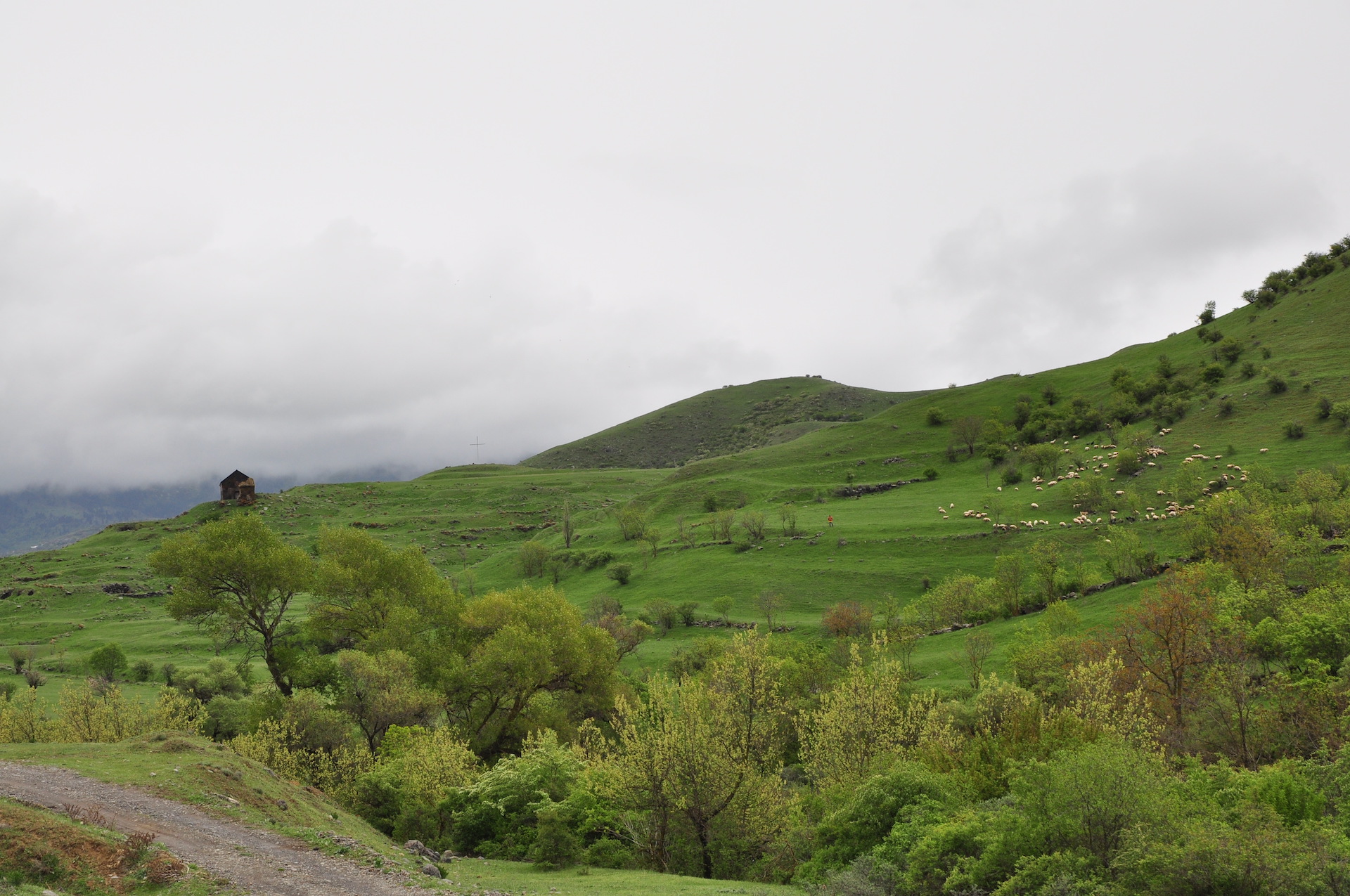
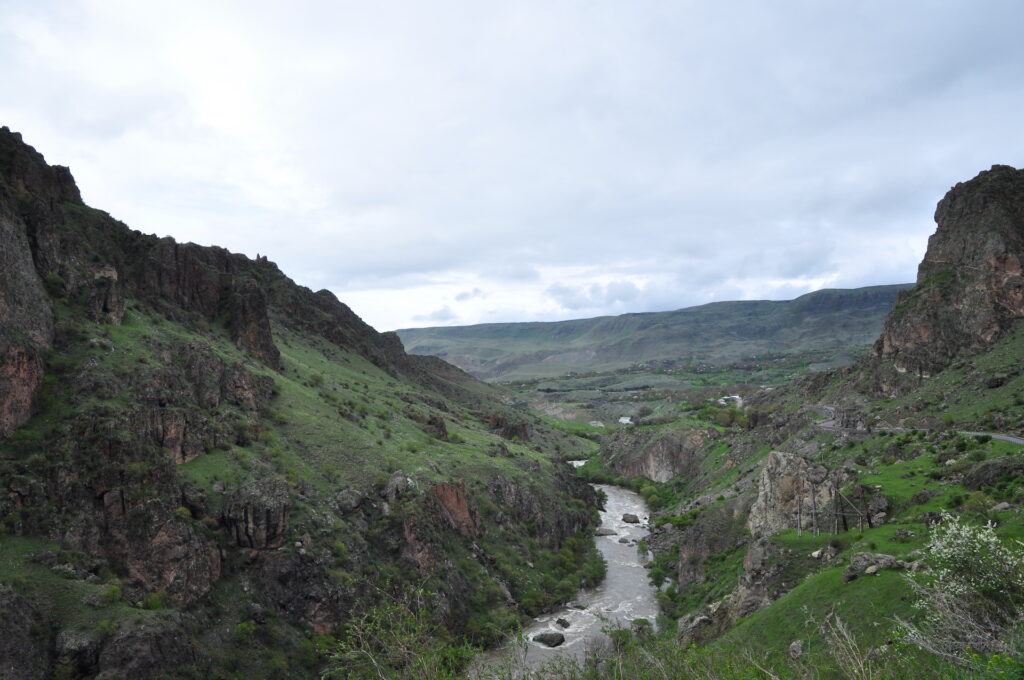
Our windshield wipers rub monotonously and swipe the drops of the mild rain and the spray that the Turkish truck in front of us is swirling up. We are on our way to the cave monasteries of Vardzia. The road is following the course of the Mtkvari river through the gorge with its maple, poplar and oak trees. A bit later the rain stops, just as the landscape is opening up and the trees thin out, clearing the view to the highlands of the Javakheti plateau.
We drive through a hamlet. Some elderly women are sitting in front of their dooryards and attempt to sell their single bundle of homegrown asparagus to one of the transiting cars. Dressed in woolen cloaks with their hair covered in a black kerchief they wait unimpressed by weather and time, fully aware of the odds of their endeavor.
Their unwavering attitude shakes me. I was prepared to leap through centuries and millennia on our journey to the cave monasteries, the composure and defiance of the stoic ladies, however, shatters my narrow concept of time. Time loses its meaning for a moment.
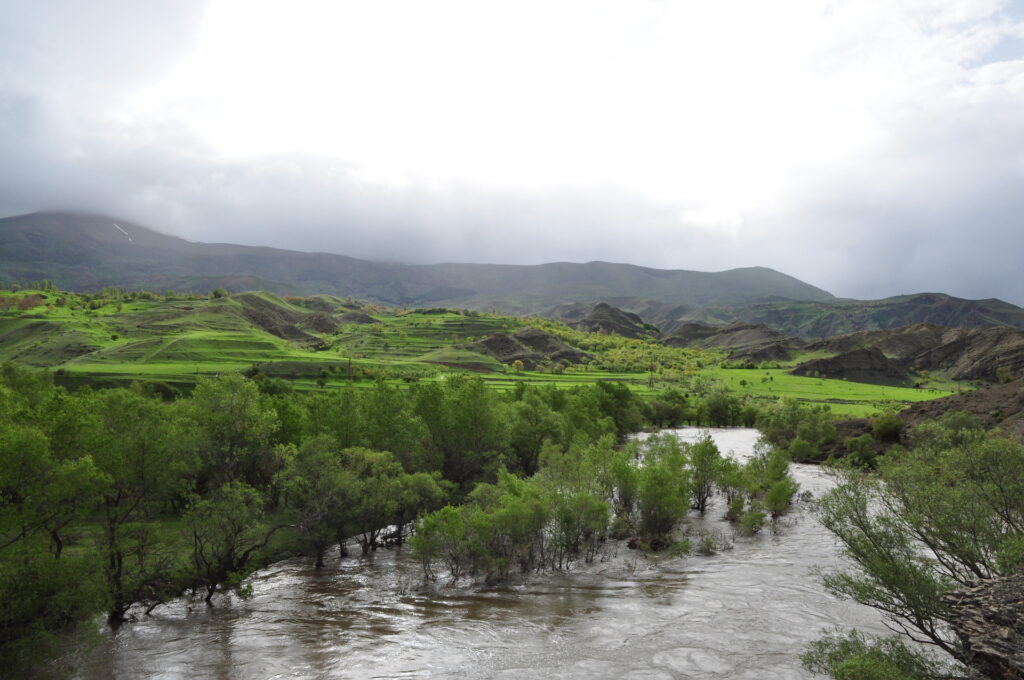
A few miles later, we traverse the construction site of the Javakethy hydro plant. The earth has been torn open and piled up to a bulwark which shall keep the Mtkavri in check. The road condition is accordingly poor and cars are forced to drive at walking pace in order to avoid potholes and debris, which makes the drivers look drunk.
In Toloshi we leave the main road which continues to Armenia and Turkey and follow instead the Mtkvari river. As we turn around the corner we are immediately captivated by the sight of the Khertvisi Fortress.
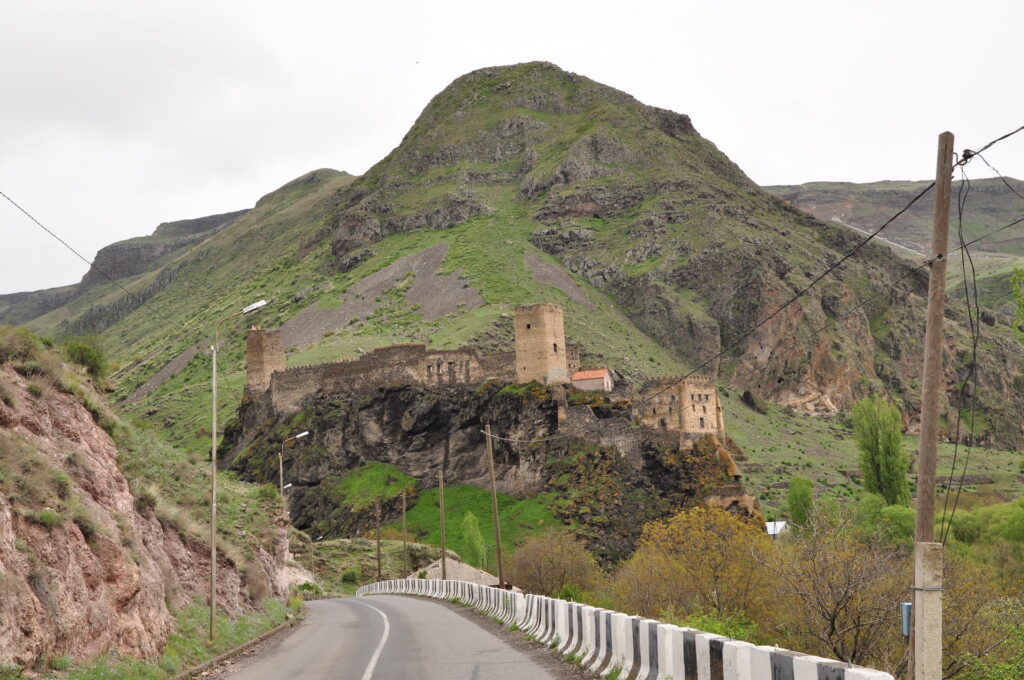
According to local legend Alexander the Great and his armies marched here during the Eastern campaign. Traces of a former fortress on the site do indeed date back to the second century BC. The current structure is younger and had the peak of its glory during the feudal era when it watched over the trade on the Great Silk Road. Today’s walls were erected in 1354 on rubles and mess that the Mongolian Hordes had left behind.
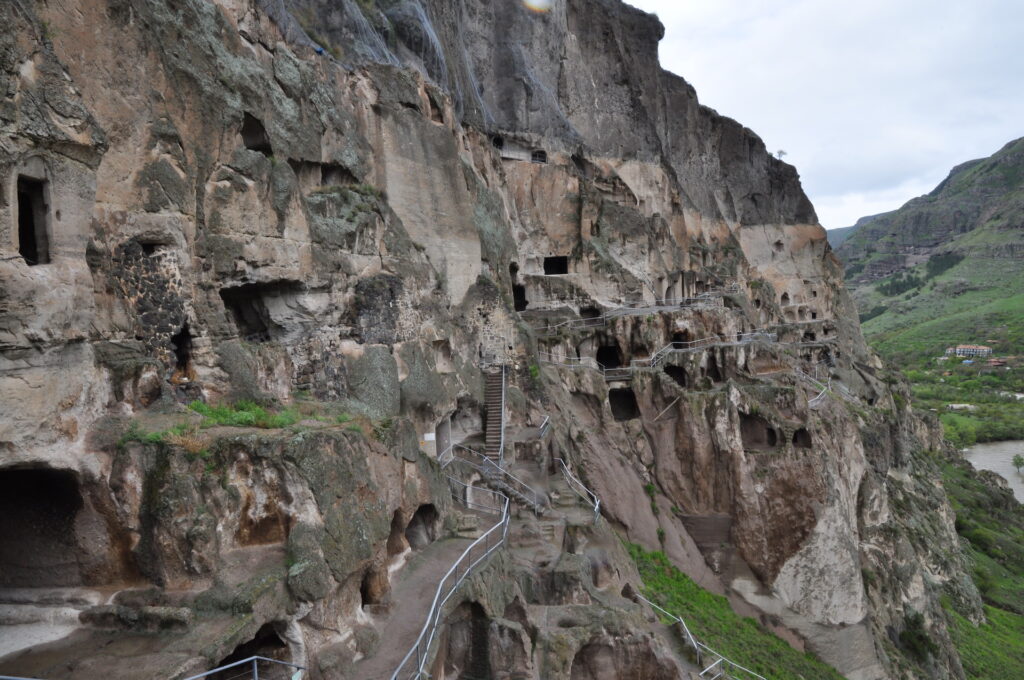
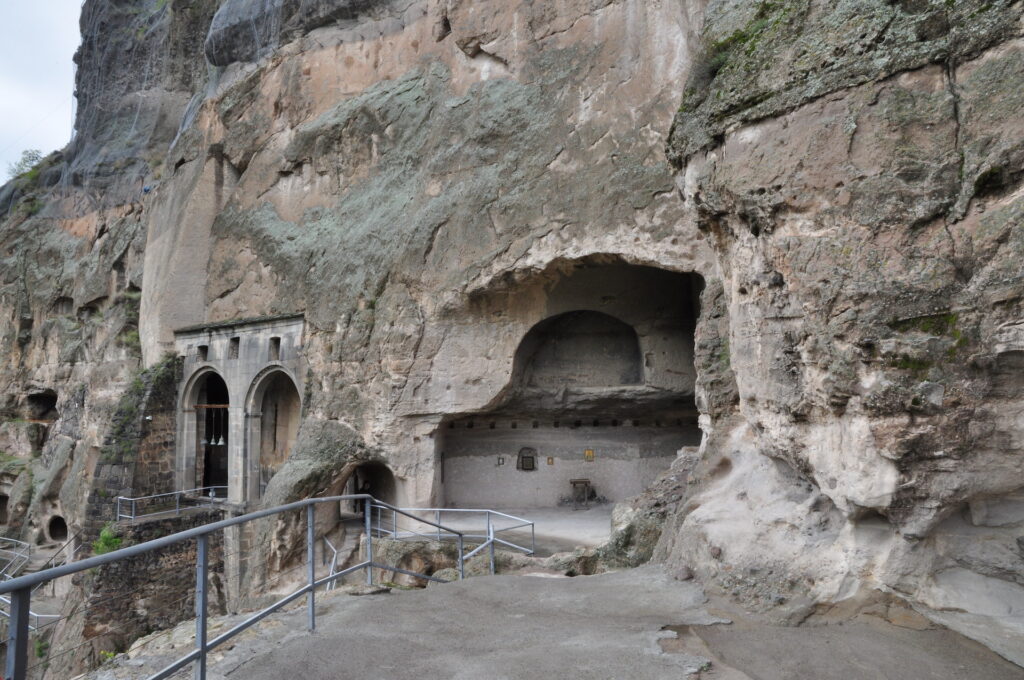
We arrive in Vardzia shortly after lunchtime. It rains again. The caves we are going to explore were commissioned by Giorgi III in 1184 as a border fortress against the Turks and Persians. Within two years his subjects chiselled and hammered a vast and hidden fortification in the cliff. His popular daughter, Queen Tamar, had it turned into a religious site and after a couple of additional construction phases 2000 monks lived here and up to 50’000 people could seek refuge in the complex which held stables, forges, bakeries, libraries, churches, wine cellars, and around 3000 dwellings.
It served well, the Mongols did not find it.
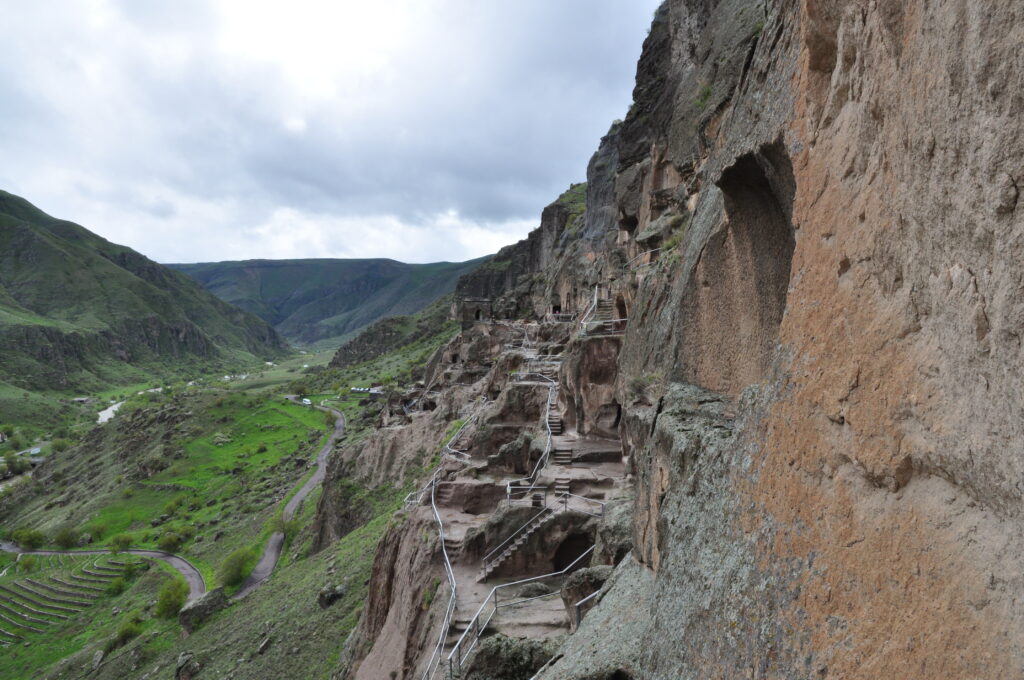
In 1283, however, an earthquake cracked it open. The light brown fraction point along the entire cliff is still visible from afar. Although re-constructed it never reached its former glory. 750 rooms are left, among them are the famous Church of Dormition and Tamar’s room. And yet, the monastic tradition is still kept alive by five monks, and every morning the bell in the tower resonates down to the valley.